
71 sheets to a project brain, in one pass.
A mid-market general contractor was burning a week and a half of skilled time on every set they bid. So we built their estimating team a custom AI workflow that does the first pass in an afternoon. This 71-sheet set was run number one.
Days of skilled work, before a single bid goes out.
A full set lands: civil, structural, architectural, mechanical, plumbing, fire, electrical. Someone has to read all of it, take off the quantities, catch the conflicts between disciplines, and write the RFIs. On a set this size that is roughly a week and a half of a project manager and an estimator's time, and the conflicts that slip through become change orders in the field. Worst of all, it repeats on every set they bid, win or lose.
We don't do the takeoff. We built them the workflow that does.
A workflow their estimators run on every set.
We did not hand back a takeoff. We built them a custom AI workflow they own and operate themselves. It runs five steps on any set they point it at, the same way on this bid and every one after.
Analyze
Reads every sheet: type, scale, schedules, materials, cross-references.
Structure
Builds a queryable database and concept wiki of the set.
Take off
All-trade quantities, every line confidence-scored.
Coordinate
Surfaces cross-sheet conflicts automatically.
Draft RFIs
Writes formal RFIs and routes them to the right designer.
It reads the drawing and marks it up.
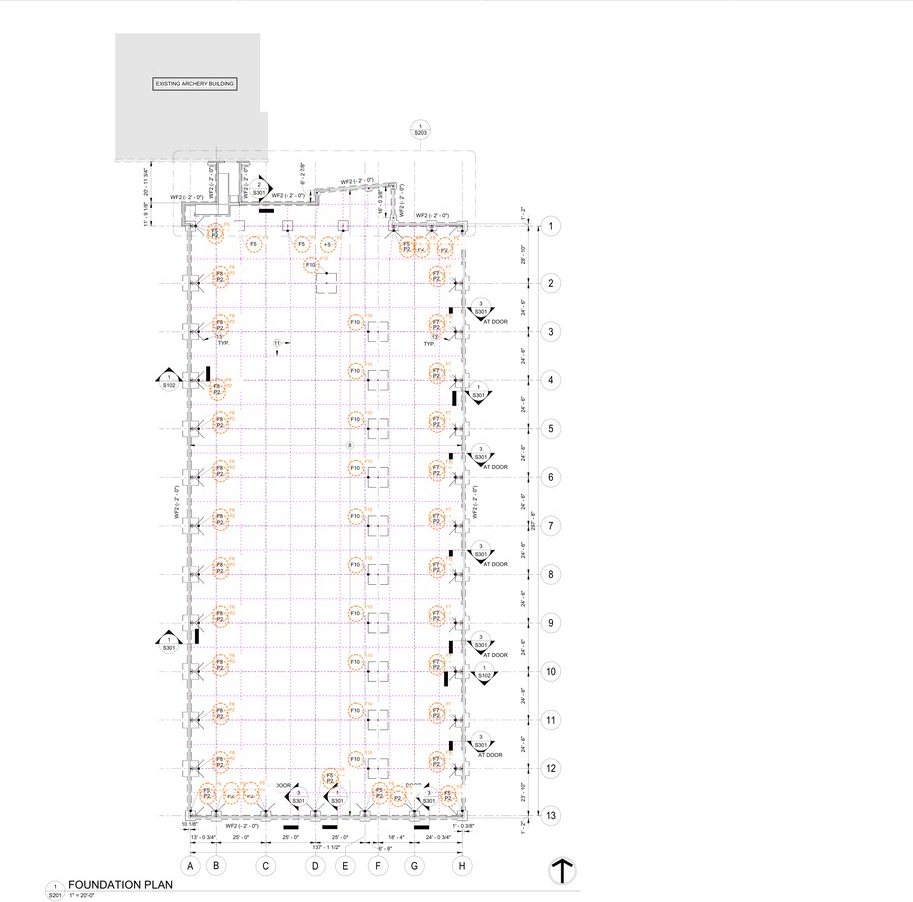
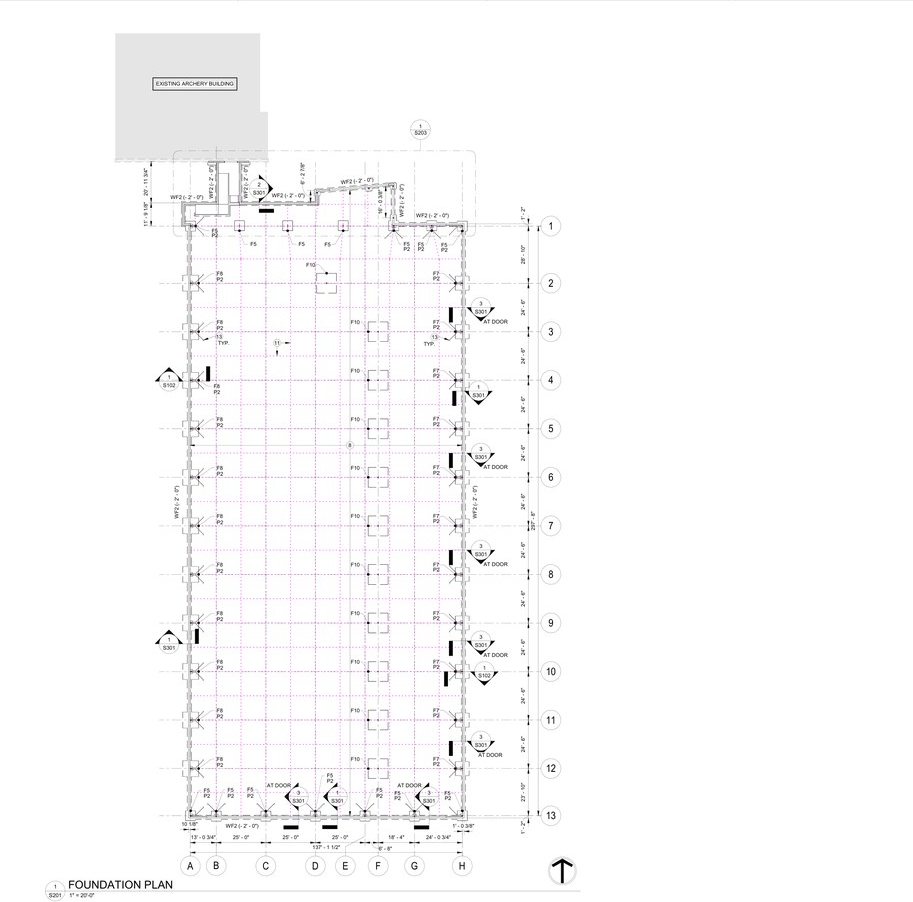
The contractor opens a dense foundation plan. Seconds later the AI has read every footing tag off the vector layer and placed all 80 footings and pedestals with coordinates. That placement is the start of the takeoff, and it is exact, not eyeballed. Drag the handle to compare.
Two layers: a brief for every sheet, and a database you can query.
71 per-sheet briefs
Title block, scale, schedules, materials, and cross-references, captured for every sheet. Each one tagged with what it answers precisely versus by inspection. Raster shop-drawing sheets are flagged, never faked.
One queryable project database
Eight tables: sheets, schedules, instances, relationships, design basis, notes, placeholders, coordination. Every fact carries a reliability score. The kind of question a flat PDF cannot answer, answered in seconds.
Every workstream, and the hours it gives back.
A single run of the workflow produced the real deliverables below, shown as the manual reality versus what their team got back in an afternoon.
Quantity takeoff
Measure and tally every trade across the set and key it into a spreadsheet. The one line everyone misses costs margin.
Coordination and QA
Cross-check 7 disciplines against each other across 71 sheets, by eye. The conflicts that slip through become change orders in the field.
RFIs
Write up each issue, cite the exact drawings, propose a fix, and route it to the right design firm. Fourteen of them.
It scores its own confidence, and flags what it cannot prove.
Every one of the 225 line items carries a confidence grade. High comes from vector tags and schedules. Medium from vision or a single source. Low where a number had to be scaled or derived.
It quantifies what it can prove and flags the rest. The estimator verifies before pricing.
About a week and a half of work, produced in an afternoon.
And this is just the first set. The workflow is a one-time build. The savings come back on every pursuit, compounding across a full year of bids into real estimating capacity, without adding a single hire.
This was one drawing set.
We don't take off your drawings for you. We build your estimating team the AI workflow that does it, so the gains compound on every project you bid, not just one. That is the model: we build the infrastructure, your team runs it. If that is the kind of leverage you want, let's talk.
Get in touch → ← Back to all case studies